


Top 10 Indicators That It’s Time to Replace Your Roof
2024-02-11
Owning a home in the Greater Toronto Area (GTA) and beyond in the province of Ontario comes with its challenges and joys. Maintaining the roof of your property is an important investment. Your roof is your house’s first line of defence against the elements and it is integral to protecting your property and maintaining its integrity. However, there comes a time when every roof has reached its end of life and needs replacing. So, how do you know when it is time for a roof replacement? If not addressed, a bad roof can lead to a lot of damage to your home and even put you at risk. This guide lays out the top 10 essential signs for knowing when to replace your roof. It is designed to help homeowners understand the why and when of taking action.
Sagging Roof
To most homeowners, a sagging roof surface is a dead giveaway: something about the house is very wrong and could present a threat to the integrity of the entire home. A sagging roof, or dip, wave or bow in a roofline, is primarily a structural failure that goes well beyond cosmetic concerns to include potentially serious threats to the integrity of a house. Ontario homes have to endure a wide variety of weather conditions, from heavy snows in winter and spring to torrential downpours, hailstorms and high winds in other parts of the year. The forces unleashed by these elements are more than enough to expose weaknesses in a home’s structural integrity, snow loads and extended soaking from rainfalls have the ability to compound these potential failures and consequently pull a sagging roof closer to a collapse.

A problem with a sagging roof requires a full inspection by a roofing professional to determine the root cause of the problem. It can be caused by an under-sized attic floor space, rapid deterioration of roofing materials, or improper installation. A sagging roof can often be associated with a problem with the attic joists or rafters. Dealing with a sagging roof frequently requires extensive structural repairs to repair the problem or full roof replacement if the sag is too bad, or there is too much damage from the settlement of the roof. For homeowners in Toronto and the GTA, and all of Ontario, knowing the risk of a sagging roof, and acting promptly and decisively, will help preserve their home and avoid the significantly higher costs, and dangers, of a delayed repair job.
Leaking roof
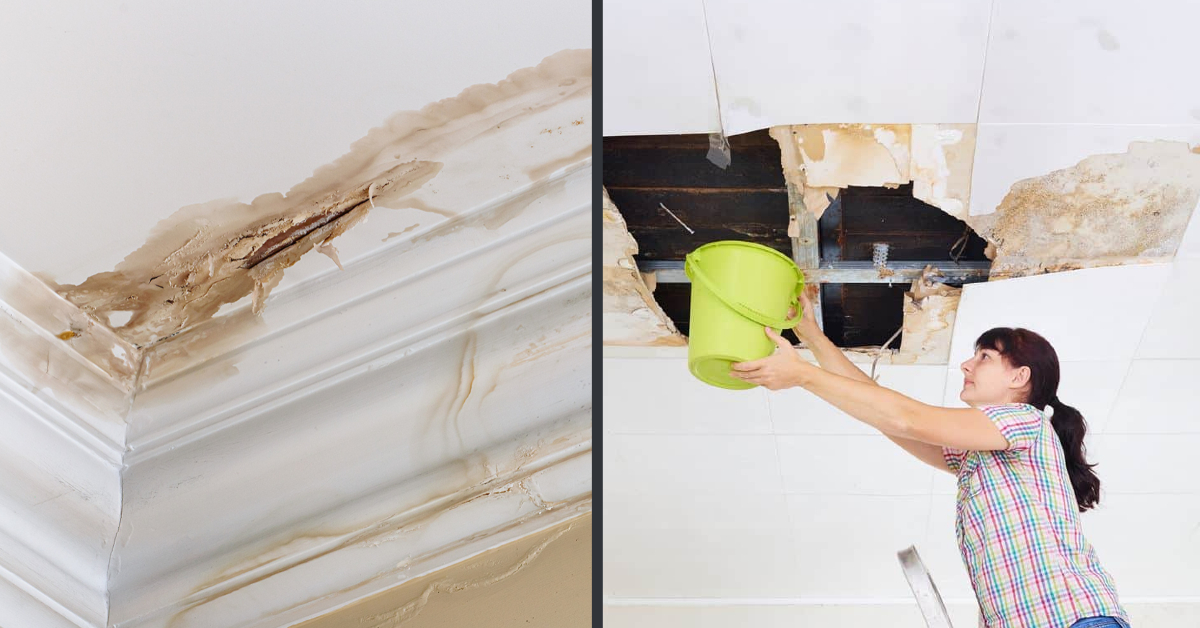
A leak from your roof is essentially your home crying for help. It’s a warning sign that its outer shell has been breached. In the diverse Ontario climate of heavy rain, snow and ice, once the shell is compromised both the inner core and the exterior envelope of the home can be under siege. Moisture will likely infiltrate. And where moisture infiltrates, mould, dry rot and condensation issues can follow, creating environments that both compromise the integrity of a building’s structural shell and damage the interior. If a homeowner is lucky, the first evidence of a leak will come in the form of staining on the ceiling, a damp patch or smoke ring on a wall, or a drip or two during heavy rainfall, which can be telltale signs that water is wreaking havoc. The homeowner must act quickly once a leak is identified because the longer it is allowed to infiltrate, the more it will spread – and the more it will cost to repair.
In many instances, water enters between the roof sheathing and the roof paper. It can then travel the length of the roof panel and subsequently the panelling on which it sits before breaching the surface below. Some common culprits are broken or missing shingles, compromised sealing around plumbing vents, leaking chimneys, and gutters blocked with debris that forces the water to back up under the roofing.
Shingles are curled or cupped
Curl or cupping on shingles can be an indicator of age, where the shingles are simply approaching the end of their useful life. However, they can also be caused by poor ventilation in your attic as the heat and moisture get trapped with the rising hot air. These thermal dynamics and moisture loads can distort and misshape the shingles which drastically compromises the roof’s ability to shed water. These shingles are now less horizontal than vertical, making them more susceptible to wind uplift as well as water infiltration, creating a scenario that leads to potential leaks and water damage to both the roof structure and the interior of your home.
There can be no roof leak protection when shingles curl and cup. This can be a glaring sign that the roof system itself is failing and it needs replacement. For homeowners in Ontario, it is important to do the due diligence of inspecting the roof as often as possible, especially after severe weather events and/or as the roof gets older.

Cracked shingles
Shingles that are cracked are the most obvious sign that your home’s “skin” is weak. Cracked shingles signify that the “first line of defence” in keeping the home dry and comfortable has been compromised. The cracks themselves represent breaches in the roof. Once cracks occur, moisture easily enters, leading to leaks that can destroy the interior part of the home. Other consequences that can result from cracked shingles include loss of granules, which lessens the effectiveness of the shingles in blocking UV rays and moisture. Areas with cracked shingles are likely to undergo ageing and attacks due to extreme weather conditions, creating the need to remedy the situation sooner than later.
Cracked shingles should never be allowed to go for too long, and homeowners should not delay in calling a roofing contractor to inspect their roof. If there is widespread cracking observed on the roof, it could be a tell-tale sign of a roofing system that is at the end of its life. It could be time for a complete roof replacement. A regular occurrence that could hamper your ability to catch cracked shingles early on is after periods of severe weather. It is during this time when you should make a point to inspect you roof for any damage that may have occurred when the worst of the weather was present.
Missing Shingles (shingle Pieces in the yard)
Missing shingles or shingle pieces scattered in your lawn are an obvious indication that your roof is in trouble – especially in the aftermath of a storm or high winds. If you observe such action, it is an indication that the adhesive bonds that typically hold your shingles to the roof have degraded and your home is open for water intrusion, and thus the possibility of serious structural damage. The evidence that shingle roofing is missing portions unleashes your roof deck to the elements, which speeds up the degradation and increases the possibility of leaks. The missing shingles also dampen the energy efficiency of your home since the better part of your insulation is breached, which translates indirectly into higher energy bills.
In order to help you maintain the integrity of your roof, and keep your home and family safe, missing shingles should be replaced with durable metal tiles. With the unpredictable weather systems that we deal with in Canada, having a metal roof with good coating aids in keeping your home weatherproof and helps protect your family and home.
Your roof looks old and worn (15-20 years old)
A very old, weathered roof is also likely to be ready or even overdue for replacement when it has reached 15-20 years in age, especially older roofs in the GTA and in Ontario where our roofs are exposed to far more extreme weather conditions than in other parts of the country. This is typically demonstrated by faded shingles, cracked roof fixtures, worn valleys and general decrepitness that dramatically affects not only the roof’s appearance on the outside of your home, but also the roof’s functionality. For homeowners who are observant enough to see these signs, having a roofing professional perform a thorough examination to see whether repairs can extend the life of your aging roof, or whether replacement is the best course of action to keep your home safe, energy efficient and fully protected from the rigours of the Ontario climate, is well worthwhile.
Unwanted Houseplants (Moss)
However, the presence of moss on a roof isn’t simply a cosmetic problem; rather, in the damp, moist temperate environment of the Niagara area in Ontario, it can be a harbinger of an ignominious end for roofing materials. Moss grows well in a damp, shady environment, and its presence on roofs can result in it acting like a sponge, trapping moisture against the roofing surface. Over time, this constant dampness can be enough to erode the structural integrity of asphalt shingles, wood shakes, and other types of roofing materials, gradually rotting or otherwise compromising their ability to maintain buildings and keep humans warm and dry. Like tendrils, moss roots can also curl up and curl over shingles as they grow, lifting them from their moorings and forcing themselves between shingles and slates. In doing so, valuable gaps can be created – gaps that, along with underlying damp, can allow water to flow into buildings and cause unwelcome water damage. This problem is exacerbated by the fact that moss roots can also scour away bonding granules on the ridgelines of shingles, removing UV light-blocking compounds and enhancing resistance to fire damage.

Preserving the integrity and longevity of your roof also requires that you address the moss growing on the surface. The urge to scrape of the moss, or to blast it off your roof with high-pressure water (power-washing) is a common – but typically ill-advised – impulse. This is likely to do additional damage to the materials of your roof. Instead, contact a metal roofing contractor who can assess the situation and make a free measurement and estimate. Metal roofs will last at least 50 years.
Grit and asphalt shingle granules in the gutter
Finding grit and asphalt shingle granules in the gutter is not uncommon, but a homeowner in Ontario has to pay attention as it can be a warning sign. The worst it can do is cause premature granule loss. This kind of loss can be attributed to two phenomena: the normal wear and tear experienced by the asphalt shingles over time, and severe weather such as from hail, heavy rains or the merciless baking heat delivered each scorching summer day from the sun. As for the first point, the granules serve to protect the shingle from UV rays, among other things, as well as they help in giving the shingle its fire-resistant quality. When these bits begin to weather away and round up in the gutter, the shingle is no longer doing its job properly, and is exposing the underlayment to potential water infiltration as well as thermal exposure all in the name of roof failure. The lack of granules can cause a quicker demise of the shingle itself, which spells the end of that roof’s lifespan. If the side wall flashing is invisible, you have a problem. It will also reduce the insulation/thermal performance of your roof and, at worst, could cause your home to leak like a sieve.
Homeowners who see excessive granules in their gutters should consider it a reason to either inspect the roof more carefully, or bring in an expert such as a professional roofing contractor, to take a more serious look at the shingles. If the roof is older and massive granule loss is evident, this could be the time to replace the roof. Catching the problem early, by cleaning gutters and, at a minimum, doing a quick roof inspection, could go a long way to allowing the homeowner to plan the cost of a roof replacement when the time comes.

Rot or discoloration on the decking in your attic
Rot and discoloration on the decking in your attic might be there to let you know that moisture-related issues in your roof have implications for the integrity of your house. Once into the layers of the roofing system and into the decking, the combined action of water and adverse conditions can lead to the rotting of the wood or the growth of fungi. This leads to the discoloration of the decking. Warning signs such as the discoloration found on the decking of your attic are usually neglected by many homeowners in their attic until they become left unattended and painful.
Simply eliminating the symptoms won’t stop rot or staining, which ultimately can compromise the integrity of your roof structure. If you see these symptoms, have your roof inspected by a roofing professional, who can help you determine the level of damage and identify the source of moisture – moisture drawn into, or trapped in, your attic. Depending on the circumstances, opportunities can present themselves to repair or replace damaged roofing materials, improve attic ventilation, or install more insulation to stop heat and moisture from entering the attic space. Sometimes, escaping water can be stopped in places where flashing has compromised, or where air leakage or roof penetrations require sealing around vents and chimneys. This is especially important in the Greater Toronto Area, where an overwhelming majority of houses don’t have adequate, effective attic ventilation.
Neighbours are getting new roofs
Often in the same neighbourhoods the roofing materials and styles might be ageing together. For buyers in the same area, you might be replacing your roofs at the same time. Working it so that you buy your new roofs together, especially a metal roof that lasts so much longer than standard shingles, might help you save group deals from suppliers and contractors. Your group might save $5000 for all of you. That’s a huge savings on a long-lasting, copper metal roof. This is a great way to bond your community with spirit and aesthetics. You can make sure your neighbours’ homes stand in match style and protection.

For those readers who are drawn by the economy of this route, a first next step would be to contact a company such as King Metal Roofing for a free quote – especially good if the neighbours pitch in and get a group quote. King Metal Roofing is a locally owned and operated metal roofing company with a focus on what works best for the Ontario climate – long-lasting, energy-efficient, and modern-looking. If neighbourhood homeowners were to do their roofs collectively, they can get a sense of the savings opportunity, both financial and time-wise. And engaging a single contractor who can install multiple roofs at once help to ensure consistency in quality and design; it will also reduce the overall project timeline. If homeowners pool their money – or work together to secure financing – the value of each house goes up, which in turns strengthens the resilience of the community for the next storm.
Conclusion
So in conclusion, learn to read the signs and know when your roof needs to be replaced. Knowing these various ‘tells’ can help you take a proactive step to keep your home safe, sound and energy efficient, where the buildings are most in need of adequate protection. From blatant signs such as the roof’s sagging, leaking, the presence of moss and the sight of cracked shingles, to more subtle signs such as granule loss in the gutters or the simple reminder of neighbour’s roofs reaching a decade or more, all of these ‘tells’ should be your cue to spring into action. Taking action to replace a damaged or antiquated roof will help pre-empt costly repairs, give your home a new aesthetic appearance, or help you get ready to put your home on the market for a premium price. Cutting cost on materials can be made by working with neighbours to place a bulk order, especially when making an upgrade like metal roofing. This type of roofing is not only healthy for your home, but with options like coloured steel, it is also healthy for the environment. The cool properties of metal lower energy costs while the aluminium content is recyclable. In the end, it is always better to invest in preventative care than deal with the fallout of needing roof repair. Check your rooftop – maybe it is time to take the plunge and get a new roof for your home?
Recent posts
GTA Homeowner’s Guide: What to Expect for Metal Roof Installation Costs in 2024
2024-04-16
How does a metal roof affect the value of a home?
2024-04-10
Everything You Need to Know About Installing and Maintaining a Metal Roof
2024-03-18
How to Choose the Best Roofing Contractor: Homeowner Tips
2024-03-12
